What Your One Point Security Maintenance Fee Actually Buys
9 October 2026
Most property owners in Johannesburg’s northern suburbs treat their security maintenance invoice like a municipal bill: pay it, don’t read it, hope nothing breaks. This approach works until the electric fence goes silent during a load-shedding window, or the estate boom refuses to lift for a resident at 5:47 on a Monday morning. Then someone asks what the monthly fee actually purchased, and the answer is usually embarrassment.
One Point Security and Maintenance, a Johannesburg-based contractor owned by Tyson Botha, structures its contracts with enough specificity to answer this question. The company targets body corporates, estates, homeowners associations, managing agents, and business premises with fixed-fee agreements that spell out exactly which systems get attention, how often, and what triggers extra charges. Understanding those terms before signing, or before complaining, keeps properties functional instead of cycling through technicians every eighteen months.
What the fixed monthly fee covers
The standard contract runs on a 12-month fixed fee with a 24-month workmanship guarantee. For that predictable line item in the levy budget, clients receive two planned maintenance visits monthly on pre-agreed days, plus two office-hours emergency call-outs with 48-hour attendance commitments. This scheduling predictability helps estates and complexes coordinate access, guard shift coverage, and resident notification.
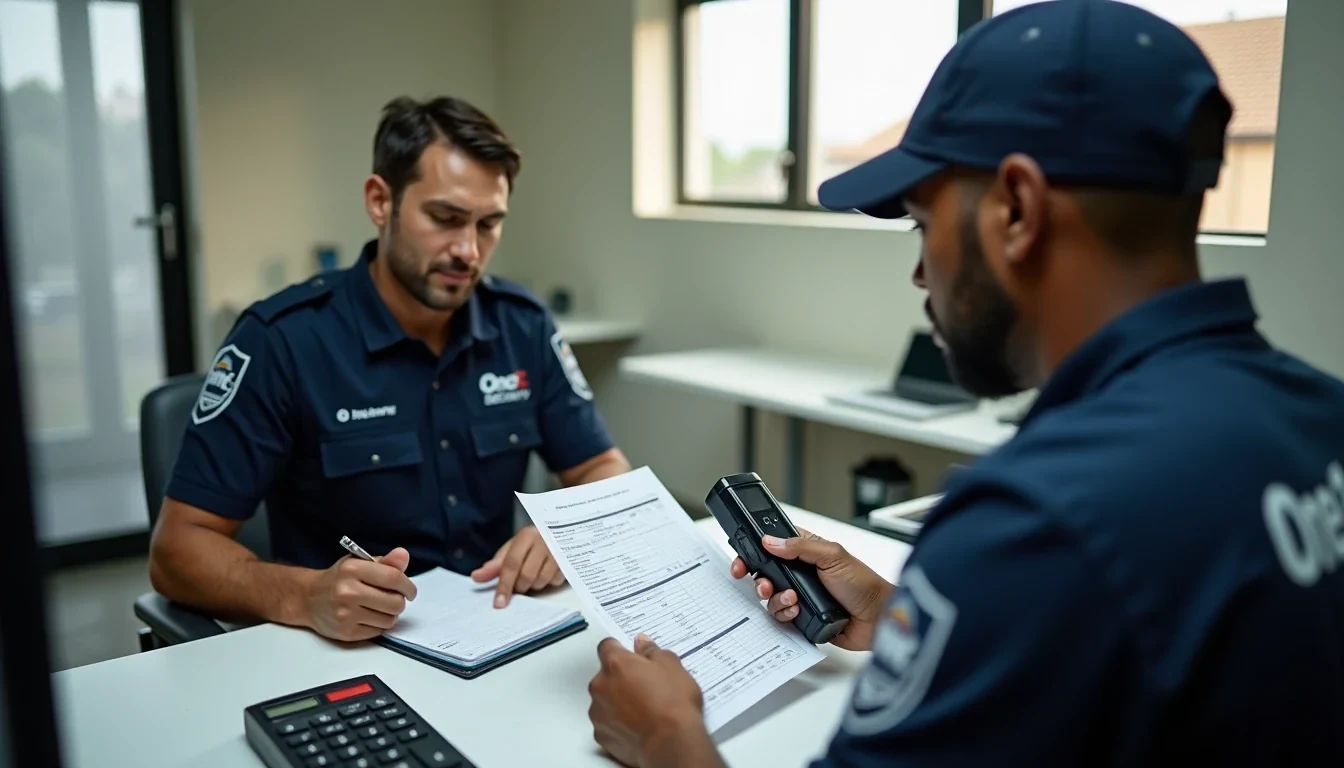
Each visit produces a job card delivered to named contacts, typically trustees’ chairs, managing agents, or facility managers, either at guardhouses or by email. These cards document every system tested, findings from the inspection, fixes completed on-site, and any items requiring written quotes before further work begins. The documentation creates accountability for the technician’s time and gives decision-makers the evidence they need when reserve fund allocations or special levies come up for discussion.
Electric fence and perimeter systems
Electric fence maintenance under these contracts includes voltage and pulse testing per zone, energiser and battery testing, and inspection of joins, insulators, tensioners, and earth spikes. Technicians replace broken or perished parts, tension strands, and test alarm signals and sirens. Vegetation growth along fence lines gets reported but not cut; that remains the property’s landscaping responsibility. Overgrowth often causes false alarms or voltage drops.
One Point Maintenance CC’s Department of Employment and Labour registration as an electric fence installer governs legal compliance. Non-compliant energiser installations or inadequate earthing can expose property owners to liability under the Electrical Machinery Regulations, particularly for estates where public access creates duty-of-care obligations beyond private residential boundaries.
Gates, booms, and access hardware
Gate and boom maintenance covers motor oil and bearing checks, roller greasing, track cleaning, battery and charger testing, plus remote, safety beam, and loop detector testing. Boom pivot and hinge servicing and rust treatment round out the mechanical side. For complexes where the gate is the most frequently touched piece of infrastructure, this scheduled attention prevents the cumulative wear that turns minor adjustments into motor replacements.
Properties with One Point Secures installations can coordinate maintenance across the full stack of perimeter and entry systems under a single contract. This reduces the finger-pointing that occurs when separate vendors blame each other for integration failures.
CCTV and surveillance verification
CCTV maintenance includes lens and rain shield cleaning, focus and angle checks, night image verification, recording and remote viewing testing, and cabling and connection inspection. The night verification step is particularly easy to skip in cheaper contracts, where daytime clarity masks infrared failures that render cameras useless during the hours they are most needed. Recording functionality testing catches the storage and configuration drift that accumulates when properties add cameras incrementally without updating NVR settings.
For properties evaluating whether their current CCTV security setup justifies its maintenance spend, the specific checklist items in One Point’s protocol provide a benchmark. If your existing provider cannot articulate what “maintenance” means beyond wiping lenses, the gap in service scope is costing you coverage.
Intercoms and access control
Intercom and access control maintenance covers power supply and wiring checks, reader and keypad cleaning, access point testing including locks and exit buttons, and user administration on written instruction with provided passwords. The user administration clause helps estates with high tenant turnover or staff rotation, where outdated credential lists create both security holes and operational friction.
Customer Zinhle M., from an estate, reported One Point installed a visitor management system enabling residents to receive gate calls and approve access via phone. This integration of telephony with physical access reduces guard workload and creates audit trails that paper logbooks cannot match.
What triggers extra charges
The fixed fee explicitly excludes replacement of major equipment including gate motors, energisers, cameras, recorders, and batteries. Vehicle or vandal damage, vegetation cutting along fence lines, call-outs beyond the two monthly allowance, and after-hours call-outs all require separate written quotes before work commences. This transparency protects both parties: property managers can budget accurately, and the contractor avoids absorbing unpredictable costs that would force fee inflation across all clients.
Customer Sipho N., from a complex, reported One Point properly serviced an unreliable guard room alarm system, replaced worn components, and restored functionality. Component replacement within the maintenance scope (perished parts, worn items) is included; full equipment replacement is quoted separately.
How contracts start and end
Before any agreement is finalised, One Point conducts a site assessment involving property walks, system testing, and written functionality reports. These reports form the basis for fixed monthly fee quotes tailored to the specific systems and condition found. Extra work and excluded services are quoted in writing before commencement, preventing the scope creep that degrades trust in long-term service relationships.
The 12-month fixed fee duration and 24-month workmanship guarantee provide planning horizons that match typical estate budget cycles and trustee election periods. Customer Puleng M., from business premises, reported Tyson Botha took over after years of inconsistent technician work, properly labelled zones, fixed wiring issues, and left a comprehensible system. The “comprehensible system” outcome, twelve or twenty-four months later, depends on documentation continuity that outlasts individual trustee or manager tenure.
Realistic effort and verification
Verifying whether your current or prospective security maintenance contract matches this scope requires approximately two hours of focused work: one hour reviewing the last six months of job cards for specificity, thirty minutes comparing quoted fees against the actual system count and condition, and thirty minutes confirming certification and insurance documentation. For volunteer trustees carrying fiduciary duty for perimeter maintenance with fixed levy budgets, this time investment is the minimum due diligence that separates proper oversight from box-ticking.
Customer Sipho K., from a complex, reported One Point coordinated camera installation at a complex entrance without interfering with gate equipment, delivering professional results. This coordination capability, across multiple trades and system types, distinguishes maintenance contractors who understand integrated security from those who service components in isolation.
Contact for site assessments in Johannesburg’s northern suburbs: 071 846 7554; tyson@onepointmaintenance.co.za. One Point Maintenance CC (CK 2010/071073/23), VAT number 4500261906; postal address PO Box 6004, Weltevreden Park, 1715.